With Heavy Hearts, Film Fans Mourn the Passing of This Legend… See more.
With Heavy Hearts, Film Fans Mourn the Passing of This Legend… See more.


Below is a roughly 1,500-word blog post built around the headline you provided, focusing on Robert Duvall and his lasting contribution to cinema.
# With Heavy Hearts, Film Fans Mourn the Passing of This Legend
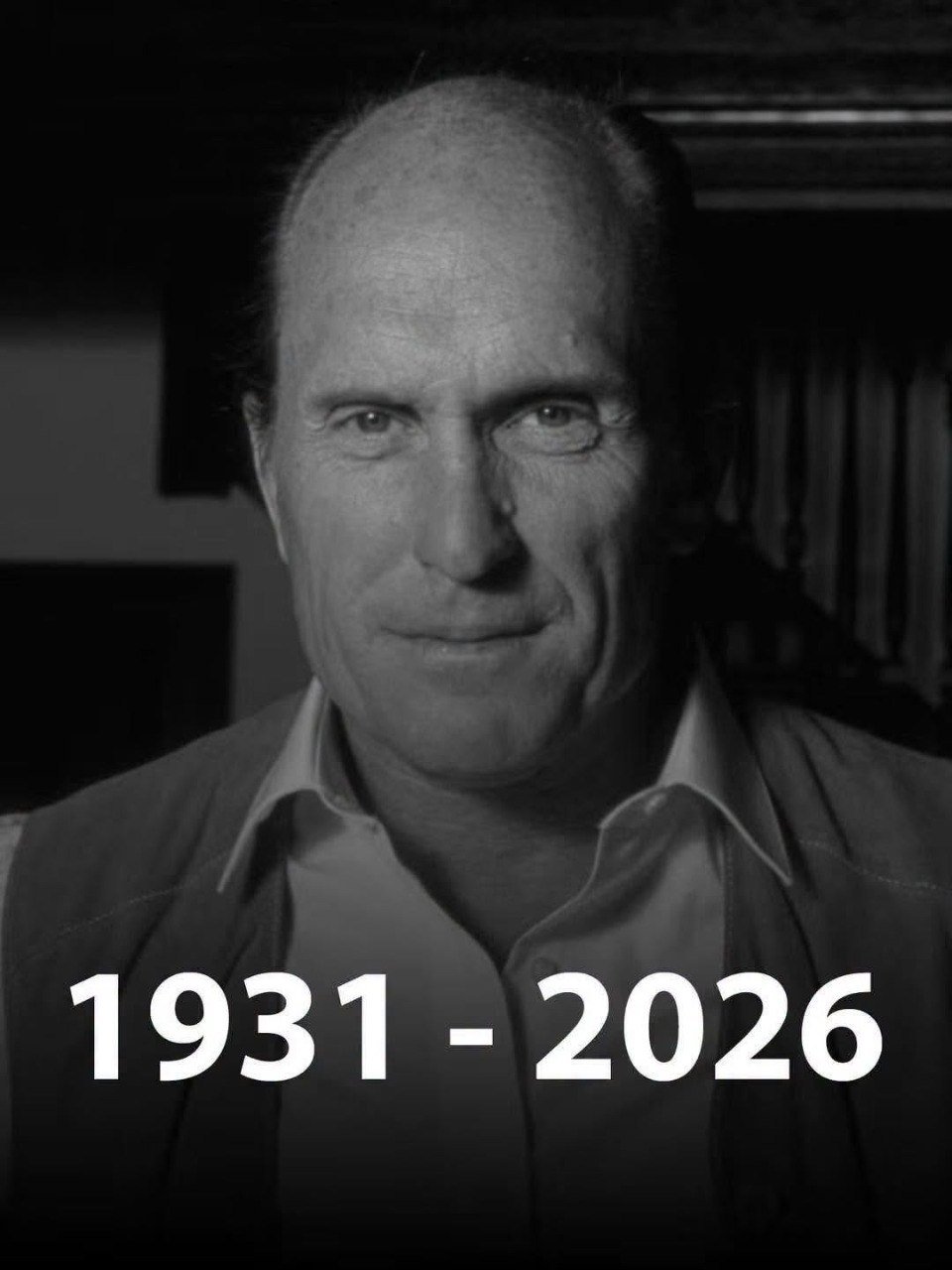
The world of cinema has lost one of its most distinctive and enduring performers. Robert Duvall, the Oscar-winning actor whose remarkable career included _The Godfather_, _Apocalypse Now_, _Tender Mercies_, _To Kill a Mockingbird_, and countless other acclaimed productions, died on February 15, 2026, at the age of 95\. His wife, Luciana Duvall, said he died peacefully at home, surrounded by love and comfort. Los Angeles Times+1
For movie lovers, Duvall’s passing represents more than the loss of a celebrated actor. It marks the end of a career that stretched across more than six decades and helped define some of the most influential periods in modern American filmmaking. His performances were rarely dependent on spectacle. Instead, he relied on observation, restraint, physical detail, and an extraordinary ability to make fictional people feel completely real.
Duvall had a gift for making even supporting characters unforgettable. Whether he was playing a Mafia consigliere, a military officer, a country singer, a preacher, a father, or a troubled lawman, he approached each role with an intensity that made audiences believe there was an entire life behind the character.
## A Career Built on Character
Robert Selden Duvall was born on January 5, 1931, in San Diego, California. He initially served in the U.S. Army before pursuing acting and studying in New York. His training included work with Sanford Meisner, whose approach emphasized truthful behavior and detailed observation.
That foundation became an important part of Duvall’s screen identity.
He did not always need long speeches or dramatic gestures to communicate what a character was feeling. A pause, a glance, a change in posture, or the way he delivered a seemingly ordinary sentence could reveal enormous amounts about the person he was portraying.
His film career began with _To Kill a Mockingbird_ in 1962, in which he played the mysterious Arthur “Boo” Radley. Though the role contained little dialogue, it immediately demonstrated Duvall’s ability to communicate through presence alone. The Guardian
Over the decades that followed, his filmography grew into one of the most impressive in American cinema.
## Tom Hagen and _The Godfather_
For millions of viewers, Robert Duvall will forever be associated with Tom Hagen, the calm and intelligent family adviser in Francis Ford Coppola’s _The Godfather_.
Released in 1972, _The Godfather_ became one of the defining films of its era, and Duvall’s Tom Hagen provided a fascinating contrast to the more openly emotional and violent members of the Corleone family.
Hagen rarely needed to dominate a scene. His authority came from listening, thinking, and choosing his words carefully. Duvall understood that restraint could be just as powerful as aggression.
He returned as Hagen in _The Godfather Part II_, further establishing the character as one of the memorable figures in the series.
His work in the films also demonstrated a quality that would become central to his career: the ability to elevate a supporting role until it became essential to the story.
## The Unforgettable Colonel Kilgore
If Tom Hagen represented Duvall’s controlled and understated side, Lieutenant Colonel Bill Kilgore in _Apocalypse Now_ revealed something entirely different.
Coppola’s 1979 Vietnam War epic gave Duvall one of his most recognizable roles. As Kilgore, he played a charismatic military officer whose confidence and apparent fearlessness coexist with an unsettling relationship to violence.
Duvall’s performance became one of the most discussed elements of the film. His portrayal was simultaneously theatrical, humorous, intimidating, and strange, capturing the contradictions at the heart of the character.
The role earned Duvall an Academy Award nomination for Best Supporting Actor. BFI
Decades later, the performance remains one of the clearest examples of how an actor can turn limited screen time into a defining cinematic moment.
## _Tender Mercies_ and an Oscar-Winning Performance
Perhaps the strongest demonstration of Duvall’s range came with _Tender Mercies_ in 1983.
In the film, he played Mac Sledge, a troubled country music singer attempting to rebuild his life. Unlike the larger-than-life figures associated with some of Duvall’s other performances, Sledge is vulnerable, quiet, and deeply human.
Duvall’s work earned him the Academy Award for Best Actor. It was a recognition not simply of a memorable performance, but of his ability to convey complicated emotions without turning them into melodrama. The Washington Post+1
The Oscar became one of the most significant milestones in a career that eventually produced seven Academy Award nominations and a wide range of acclaimed performances. Vanity Fair
## More Than One Kind of Actor
One reason Duvall’s legacy is so substantial is that his career cannot be reduced to a single genre.
He worked in crime films, war movies, family dramas, Westerns, thrillers, historical productions, television projects, and independent films. He could play authority figures and outsiders, heroes and deeply flawed men.
His credits included _M_A_S_H\*, _Network_, _The Great Santini_, _The Natural_, _Lonesome Dove_, _Colors_, _The Apostle_, _A Civil Action_, and _The Judge_, among many others. The Washington Post+1
He was also a filmmaker in his own right. For _The Apostle_, released in 1997, Duvall wrote, directed, and starred in the film, playing a fallen Pentecostal preacher attempting to rebuild his life. The project reflected the actor’s interest in complicated people whose lives could not easily be divided into categories of good and evil.
That interest in complexity became one of the trademarks of his work.
## A Six-Decade Contribution to Film
Duvall’s career unfolded during an extraordinary transformation in American filmmaking.
He emerged during the era when the traditional Hollywood studio system was changing and a new generation of filmmakers was experimenting with more realistic characters, challenging stories, and unconventional approaches to acting.
Directors such as Coppola helped create what became known as the New Hollywood era, and Duvall became one of the performers associated with that movement.
Yet his career did not end when that period passed.
He continued working for decades, appearing in major films well into the 21st century. His later roles included _The Judge_ in 2014, for which he received another Academy Award nomination, and _Hustle_ in 2022. The Washington Post+1
That longevity is particularly remarkable because Duvall never seemed interested in maintaining a conventional movie-star image. His reputation rested primarily on the work itself.
## The Power of an Unforgettable Face
There are performers whose names audiences remember because of one iconic role. Duvall was different.
His face, voice, movements, and manneris