Things You Should Never Plug Into A Power Strip
We use them behind televisions, underneath desks, beside beds, and throughout kitchens to turn one electrical outlet into several.
They’re incredibly convenient — but convenience can create a dangerous misconception:
Having six available sockets doesn’t necessarily mean you can safely power six appliances at the same time.
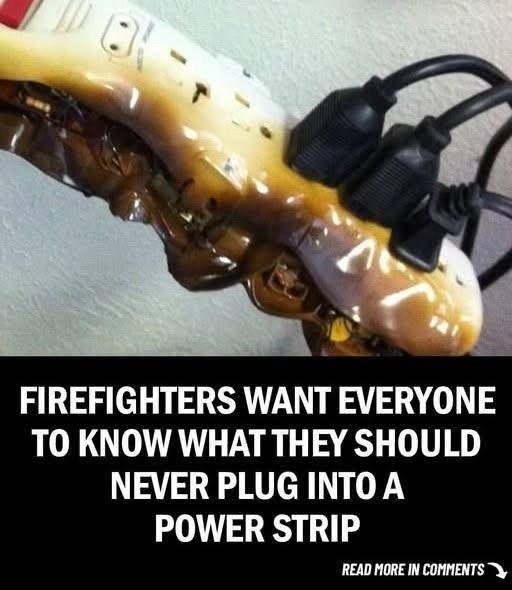
Every power strip has electrical limits. Connecting appliances that draw large amounts of power can overload the strip, causing excessive heat, melted components, damaged wiring, or potentially a fire.
The U.S. Fire Administration advises consumers not to overload power strips and recommends using strips equipped with internal overload protection.
Here are 10 things you should think twice about plugging into one.
- Space Heaters
This is one of the most important items on the list.
Portable electric heaters can consume a substantial amount of electricity for extended periods.
The Consumer Product Safety Commission specifically advises:
Never power a portable electric heater with an extension cord or power strip.
Instead, follow the manufacturer’s instructions and plug the heater directly into an appropriate wall outlet.
Also keep heaters away from curtains, bedding, clothing, paper, and other combustible materials.
- Refrigerators
Your refrigerator may not look like an especially demanding appliance because it quietly operates all day.
But refrigerators contain compressors that cycle on and off and can have significant startup electrical demand.
OSHA specifically identifies refrigerators among high-power loads that power strips aren’t designed to handle.
The U.S. Fire Administration also illustrates that refrigerators shouldn’t be powered through extension cords.
A refrigerator should generally use an appropriate wall receptacle in accordance with its manufacturer’s installation requirements.
- Microwave Ovens
Microwaves can draw substantial power during operation.
That’s very different from charging a phone or running a small desk lamp.
OSHA lists microwave ovens alongside refrigerators and space heaters as examples of high-power loads that can exceed the recommended ampere rating of many power strips.
Plug the microwave into an appropriate wall outlet as directed by the manufacturer.
- Toasters and Toaster Ovens
Small appliance doesn’t necessarily mean small electrical load.
Toasters generate intense heat using electrical heating elements, while toaster ovens can operate at high wattages for longer periods.
That makes them poor candidates for an ordinary power strip, particularly when several other devices are connected to the same strip.
Use an appropriate wall outlet and follow the appliance manufacturer’s instructions.
- Portable Air Conditioners
Air conditioners use compressors and motors and can demand considerable electrical power.
This is another category where using an undersized power strip can result in overheating or tripping protection devices.
The safer approach is to follow the air conditioner’s installation instructions and use the type of wall receptacle and circuit specified by its manufacturer.
- Hair Dryers
A hair dryer looks like a relatively small handheld appliance.
Electrically, however, many models are powerful heating devices.
That combination of a heating element and blower means the electrical demand can be substantial.
Rather than plugging a high-powered hair dryer into a crowded strip, use an appropriate wall outlet and follow the product instructions.
Because hair dryers are frequently used near sinks and bathrooms, electrical-shock protection is another important consideration.
- Coffee Makers and Other Heating Appliances
Coffee makers heat water rapidly, which can require significant electrical power.
The same principle applies to other countertop appliances containing powerful heating elements.
The problem becomes worse when several appliances are connected simultaneously.
For example, running a coffee maker, toaster, and another high-wattage appliance from one strip can place much more demand on it than someone might expect.
- Washing Machines and Other Large Appliances
Large household appliances generally shouldn’t depend on ordinary power strips as substitutes for properly installed outlets.
Washing machines contain motors and other electrical components that can create substantial loads.
Follow the manufacturer’s installation requirements and connect major appliances to suitable wall receptacles and circuits.
- Another Power Strip
Here’s a surprisingly common mistake:
Power strip → power strip → more devices.
It’s often called daisy chaining.
It may appear to give you many additional sockets, but it doesn’t magically increase the amount of electrical power safely available from the original outlet or circuit.
Virginia Tech’s electrical-safety guidance says power strips should be connected directly to wall receptacles and specifically prohibits plugging one power strip into another.
If you permanently need more outlets in an area, having an electrician assess the situation is safer than building a chain of strips.
- High-Power Appliances That Exceed the Strip’s Rating
This final category is the rule that ties everything together.
Don’t judge safety based solely on whether an appliance’s plug physically fits.
Check the electrical ratings.
Power strips have maximum current and power limits, and appliances have their own electrical requirements.
OSHA notes that an outlet device’s ampere rating must be sufficient for the load being served.
If the appliance’s requirements aren’t compatible with the power strip — don’t use that combination.
What CAN You Plug Into a Power Strip?
Power strips are commonly better suited to relatively low-power electronics.
Depending on the strip’s rating and manufacturer’s instructions, examples may include things such as:
Computers, monitors, phone chargers, lamps, televisions, routers, and similar electronics.
Even then, the total connected load matters.
Don’t assume that every unused socket needs to be filled.
A Power Strip Isn’t Automatically a Surge Protector
These terms are sometimes used interchangeably, but they’re not necessarily the same thing.
A basic power strip primarily provides additional outlets.
A surge protector incorporates components intended to protect connected electronics against certain voltage surges.
But here’s the important part:
Surge protection doesn’t turn a strip into an unlimited power source.
Its electrical load rating still matters.
Watch for These Warning Signs
Stop using a power strip if you notice concerning signs such as:
Melted or discolored plastic
Cracks or physical damage
A loose plug or outlet
A burning smell
Sparks
Unusual heat
The CPSC notes that overheating can occur when cords are overloaded and advises disconnecting appliances when a cord becomes hot.
Damaged electrical products shouldn’t simply be taped up and returned to service.
Never Hide Cords Under Rugs
Running a cord underneath a rug may make a room look cleaner, but it can create another hazard.
Cords can become damaged, pinched, or overheat without you noticing.
The U.S. Fire Administration recommends avoiding locations where cords can be damaged or pinched, including underneath carpets or rugs.
Keep electrical cords visible and protected from foot traffic and furniture.
Cheap or Damaged Cords Can Be Dangerous
Quality matters.
The CPSC warns that extension cords lacking appropriate safety characteristics can present risks of electrical shock or fire.
Look for products that comply with applicable recognized safety standards in your country, follow their instructions, and replace damaged equipment.
Never assume a bargain electrical accessory is worth the risk.
What If the Power Strip Keeps Tripping?
Don’t repeatedly reset it without investigating why.
The protection may be responding to an overload or another electrical problem.
Disconnect some devices and check the manufacturer’s load limits.
If outlets, plugs, or cords repeatedly become hot, spark, smell burned, or behave abnormally, stop using them and have the electrical system inspected by a qualified professional.
The Bottom Line
Power strips are extremely useful — when they’re used for the right devices.
Problems begin when we treat extra sockets as extra electrical capacity.
High-demand appliances such as portable heaters, microwaves, refrigerators, and other heavy electrical loads should generally be connected to suitable wall receptacles according to their manufacturer’s requirements rather than ordinary power strips. OSHA specifically identifies heaters, refrigerators, and microwaves as examples of loads that can exceed many strips’ recommended ratings.
And one rule is particularly easy to remember:
Never plug one power strip into another.
A few seconds spent checking the appliance wattage, strip rating, and manufacturer’s instructions can help prevent overheating, equipment damage, electrical shock, and potentially a house fire.
Safety note: Electrical requirements vary by appliance and country. Always follow the manufacturer’s instructions and applicable local electrical codes. If you’re uncertain about an outlet, circuit, or appliance installation, consult a qualified electrician.