Baking Soda for Age Spots: What You Should Know Before Trying It
- by Food
Age spots—also called solar lentigines—are common areas of darker pigmentation that develop over time, particularly on parts of the skin that receive frequent sun exposure. They can appear on the face, hands, shoulders, and arms.
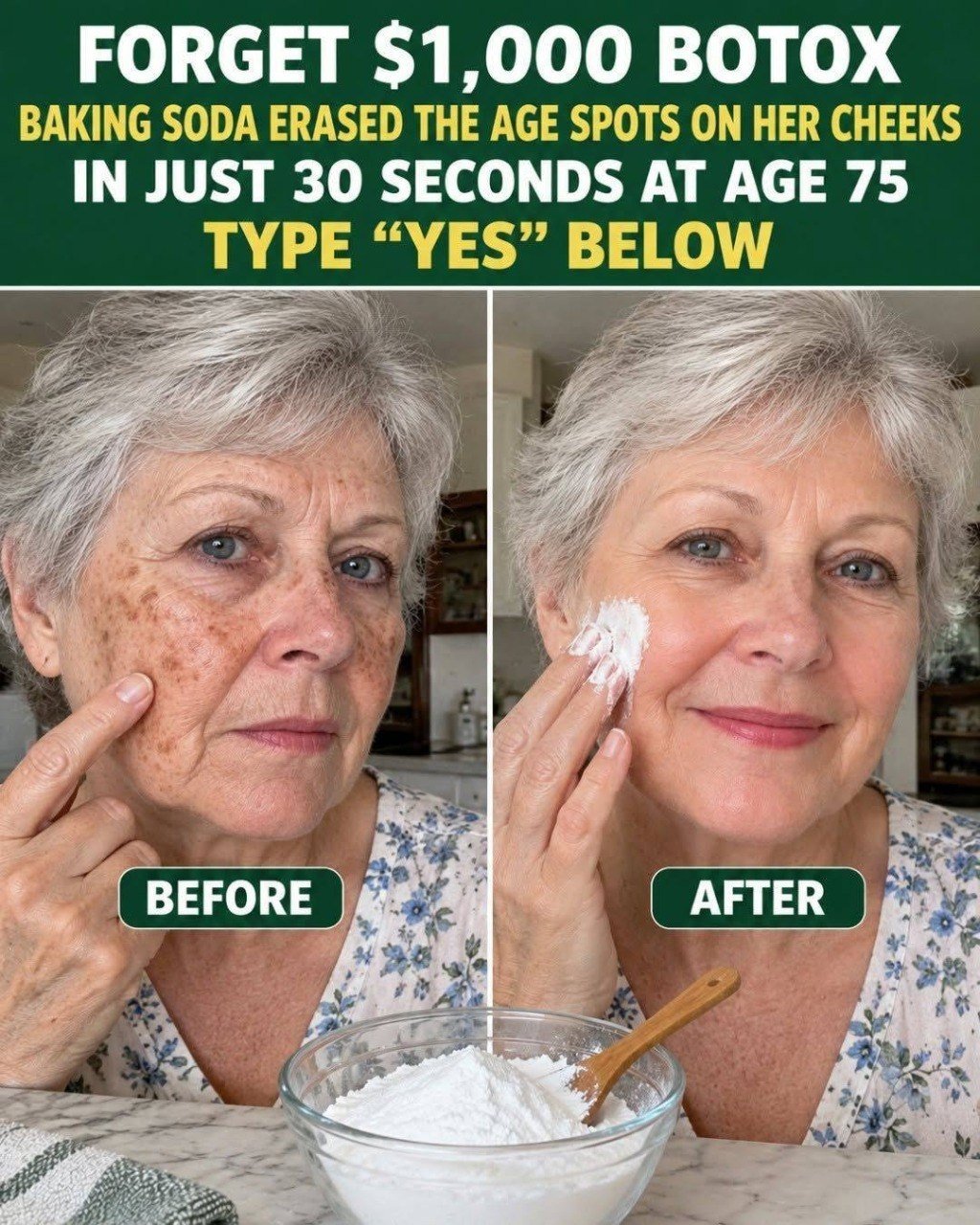
You may see online claims that baking soda can erase these spots in seconds. However, there is no good evidence that baking soda can safely remove age spots in 30 seconds. Its mild abrasive and alkaline properties may actually irritate the skin, especially on the face.
Why Baking Soda Isn’t a Good Spot Treatment
Baking soda can temporarily make skin feel smoother because it removes some surface material, but that doesn’t mean it removes the pigment responsible for an age spot.
Using it repeatedly may cause:
- Dryness and tightness
- Redness or burning
- Skin irritation
- Damage to the skin barrier
- Darker pigmentation after irritation, particularly in susceptible skin
So the dramatic “before and after” images commonly used in social-media posts shouldn’t be interpreted as proof that baking soda caused the change.
What Can Actually Help Age Spots?
A more evidence-based approach focuses on sun protection and proven skin treatments.
1. Use sunscreen every day
Apply a broad-spectrum sunscreen with SPF 30 or higher to exposed skin. Consistent sun protection can help prevent existing pigmentation from becoming darker and reduce the development of additional spots.
2. Consider vitamin C
Products containing topical vitamin C may help improve uneven pigmentation over time and can be incorporated into a regular skincare routine.
3. Retinoids may help
Retinoids can encourage skin-cell turnover and may gradually improve the appearance of sun-related pigmentation. They can also cause irritation, so they should be introduced carefully.
4. Dermatological treatments
For persistent age spots, a dermatologist may discuss options such as prescription creams, chemical peels, cryotherapy, or certain laser/light treatments depending on the individual’s skin and diagnosis.
A Simple Gentle Routine
Morning:
Cleanser → moisturizer → broad-spectrum SPF 30+
Evening:
Gentle cleanser → appropriate pigmentation treatment → moisturizer
Give these approaches time. Skin pigmentation generally changes over weeks to months, not 30 seconds.
One Important Warning
Not every dark spot is an age spot. A new, rapidly changing, irregular, bleeding, or unusually colored lesion should be examined by a healthcare professional before attempting to treat it at home.
Bottom line: baking soda isn’t a proven 30-second solution for age spots, and putting a harsh homemade scrub on facial skin can do more harm than good. A gentle skincare routine, consistent sun protection, and professional evaluation when needed are much safer approaches.