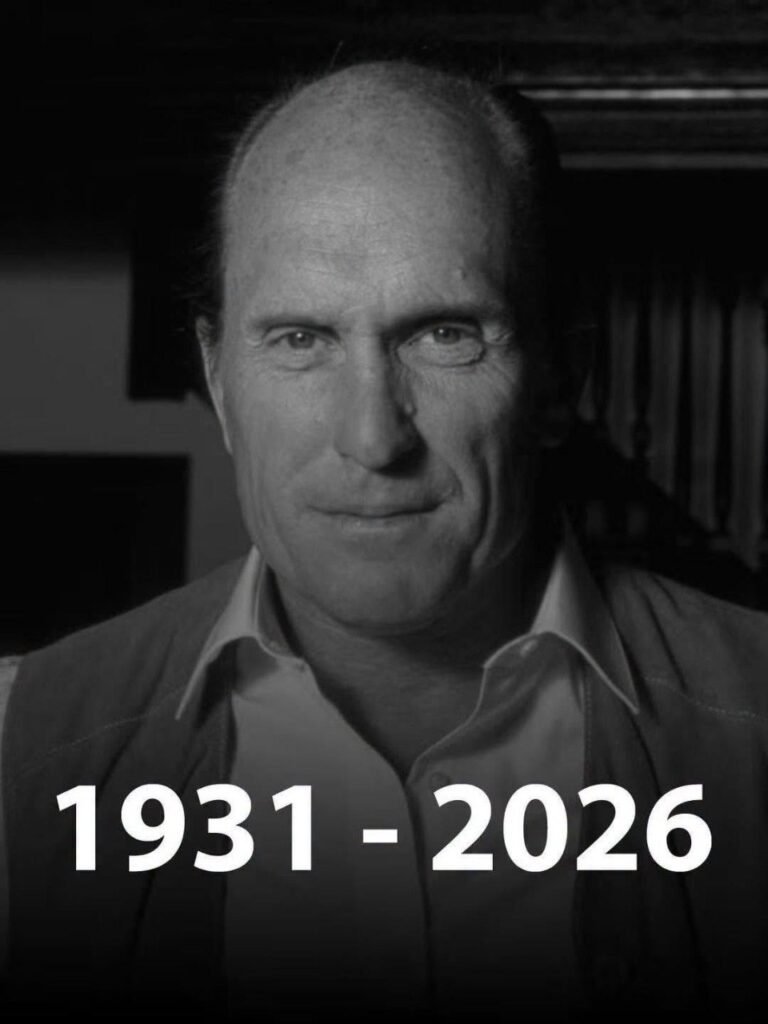
Breaking News, they just…
Breaking News: They Just Made an Announcement — Here’s What We Know
Breaking news headlines can change within minutes. One moment, everything appears normal. The next, a short message begins spreading across social media, accompanied by dramatic words such as “They just…” or “This was just announced.”
For readers scrolling through Facebook, Instagram, X, or other platforms, those few words can immediately create curiosity.
What happened?
Who made the announcement?
Why is everyone talking about it?
And perhaps most importantly: is the information actually confirmed?
That is where readers need to slow down.
A breaking-news teaser that ends with “they just…” does not provide enough information to establish what happened. Without the identity of the people involved, the subject of the announcement, the location, the time, and a reliable source, there is no responsible way to fill in the missing details.
But there is a bigger story behind these mysterious headlines—and it explains why they spread so quickly.
Why “Breaking News” Gets Immediate Attention
The words “breaking news” carry a powerful psychological effect.
They suggest that something has happened very recently and that readers need to know about it immediately.
Traditional news organizations use breaking-news alerts when a significant event is developing or when important information has just been confirmed.
On social media, however, the phrase can also be used simply to attract attention.
A post may contain only a few words.
“Breaking news…”
“They just…”
“Something happened…”
“More details coming…”
That incomplete sentence creates a gap in the reader’s knowledge.
People naturally want to close that gap.
The result is often a rush of clicks, comments, shares, and reactions.
The Curiosity Gap
One of the most common techniques used in online headlines is the curiosity gap.
Instead of telling the entire story, the headline deliberately withholds the most important piece of information.
For example:
“Breaking News, they just…”
The reader immediately wants to know what comes next.
Did someone make an announcement?
Did a company release something?
Did an event occur?
Did a celebrity make a statement?
Did authorities issue a warning?
The possibilities are almost endless.
That is precisely what makes the format effective.
But it is also why readers should be careful.
A headline designed around curiosity is not necessarily a complete news report.
What Is Actually Confirmed?
When a breaking-news story appears online, the first question should not be, “What do I think happened?”
It should be:
“What can actually be verified?”
A reliable report should normally provide several basic details.
Who is involved?
What happened?
Where did it happen?
When did it happen?
How do we know?
Which source confirmed it?
If those questions cannot be answered, the story may still be developing—but readers should avoid treating speculation as fact.
Why Developing Stories Are Difficult
Breaking news is often incomplete by nature.
When an important event happens, information may emerge gradually.
An initial report might confirm that something occurred without explaining why.
Later reports may identify the people involved.
Officials may release additional information.
Witnesses may provide details.
Investigators may clarify what happened.
As a result, the first version of a story can look very different from the final confirmed account.
This is one reason reputable news organizations frequently update articles.
A developing story is not necessarily a false story.
It simply means the available information is still changing.
Social Media Can Move Faster Than Verification
The modern internet allows information to travel incredibly quickly.
Someone can publish a post in seconds.
Another person can screenshot it.
A third person can repost the screenshot.
Within minutes, thousands of people may be discussing the claim.
The original source can become difficult to identify.
That creates a serious problem.
By the time someone asks, “Where did this information come from?” the post may already have been shared thousands of times.
The number of shares, however, does not prove that something is true.
Virality and verification are two different things.
A Dramatic Image Does Not Prove a Story
Another common feature of breaking-news posts is a dramatic photograph.
The image may show emergency vehicles, a celebrity, a hospital, a government building, a crowd, or another emotional scene.
But an image alone does not establish when or where it was taken.
Photographs can be reused years after an event.
Old images can be paired with new claims.
Pictures from unrelated events can be presented as if they belong to the current story.
That is why readers should examine the image separately from the headline.
Ask:
Is there a date?
Is there a location?
Does the image actually match the event being described?
Has the same photograph appeared in older news stories?
The Importance of the Date
One of the simplest ways to avoid misinformation is to check the date.
An old article can suddenly become popular again.
A video from years ago can be reposted with a new caption.
A photograph from an earlier event can circulate as though it happened today.
Sometimes the information itself is genuine—but the timing is wrong.
That distinction matters.
A statement that was accurate several years ago may not describe the current situation.
Check the Original Source
If a post says, “They just announced it,” look for the original announcement.
Was it published by the person involved?
Was it released by an official organization?
Was it reported by a reputable news outlet?
Was there an official statement?
Or does the claim exist only through reposts?
The closer you can get to the original source, the easier it becomes to determine what was actually said.
A screenshot without a source should be treated cautiously.
Why People Share Before Reading
Social media encourages rapid reactions.
People see something shocking and immediately press “share.”
Sometimes they share because they are surprised.
Sometimes they want friends and family to see it.
Sometimes they believe sharing the information will help others.
But emotional reactions can happen faster than verification.
A person may share a headline before opening the article.
Another person may then share the same headline.
Soon, the claim appears everywhere.
Its popularity creates the impression that it must be true.
But repetition does not transform an unverified statement into a verified fact.
“Everyone Is Talking About It” Is Not Evidence
One of the most misleading signals online is apparent popularity.
A post with thousands of comments may look authoritative.
It may seem impossible that so many people could be discussing something that isn’t true.
But online popularity simply means that many people encountered the content.
It does not tell you whether the underlying claim is accurate.
A false rumor can become enormously popular.
A genuine story can also receive little attention.
The two things should never be confused.
What a Responsible Breaking-News Update Looks Like
A responsible update generally separates confirmed information from unknown information.
For example, instead of claiming:
“They just announced everything!”
a careful report might say:
“An announcement has reportedly been made, but additional details have not yet been independently confirmed.”
That wording may seem less dramatic.
But it tells readers exactly where the situation stands.
It acknowledges uncertainty without pretending to know more than the available evidence supports.
Rumors Can Cause Real Harm
This is particularly important when breaking news involves people.
Unverified claims about deaths, accidents, arrests, illnesses, disasters, or family emergencies can cause genuine distress.
Imagine seeing a headline claiming that someone you care about has died.
You might immediately call relatives.
You might panic.
You might share the post.
Then you discover that the headline was misleading or completely false.
The emotional damage can be significant.
That is why responsible reporting matters.
When the Story Involves a Celebrity
Celebrity stories are especially vulnerable to misleading headlines.
Famous people have enormous audiences, which means a sensational claim can spread rapidly.
A headline may say:
“Fans are devastated…”
“Everyone is in shock…”
“They just confirmed…”
“Sad news…”
But emotional language does not establish the underlying facts.
Readers should look for a direct statement or reliable reporting before accepting a major claim involving a public figure.
When the Story Involves a Government or Major Organization
The same principle applies to official announcements.
If a government agency, company, sports organization, university, or other major institution supposedly announces something important, there is usually an official communication somewhere.
Look for:
An official website.
An official statement.
A verified social-media account.
A press release.
A reputable news report quoting the announcement.
If the only evidence is an anonymous post saying “they just announced it,” the information remains incomplete.
Breaking News Can Develop in Stages
Sometimes the most responsible thing a reader can say is:
“We don’t know yet.”
That is not weakness.
It is accuracy.
Early information may be incomplete.
Officials may still be investigating.
Journalists may be contacting sources.
Organizations may be preparing statements.
Witnesses may be providing information.
Waiting for confirmation can prevent unnecessary confusion.
Why “See More” Headlines Work
The phrase “See more” is especially common on social media.
It creates the feeling that important information is just one click away.
The user sees a dramatic headline but not the complete story.
They click.
The website receives traffic.
That does not automatically mean the article is unreliable.
But readers should be aware that curiosity is often part of the business model of online publishing.
The more compelling the mystery, the more likely people are to click.
Don’t Let Urgency Replace Accuracy
One of the most important lessons of modern news consumption is that urgency and accuracy are separate concepts.
Something can be urgent and accurately reported.
Something can also be urgent and poorly reported.
The phrase “just happened” should therefore trigger verification—not panic.
Ask yourself:
What exactly happened?
Who says it happened?
When was that information released?
Is there independent confirmation?
Are reputable outlets reporting the same thing?
If those questions cannot be answered, wait.
The Role of Responsible Readers
News literacy is not only the responsibility of journalists.
Readers also play an important role.
Every time someone shares a story, they help determine how far it travels.
That means a simple pause before sharing can make a difference.
Read beyond the headline.
Check the date.
Look for the source.
Compare reports.
Separate confirmed facts from speculation.
And be particularly cautious when the story concerns someone’s death, health, safety, or personal life.
What We Can Learn From Incomplete Headlines
A headline like “Breaking News, they just…” may seem insignificant.
But it represents a larger change in how people consume information.
Many people no longer encounter news through a newspaper or scheduled television broadcast.
They encounter it through an algorithm.
A headline appears between photographs, videos, advertisements, and personal updates.
The goal is often to capture attention immediately.
That environment rewards short, emotional, mysterious messages.
Understanding that environment helps readers become more careful consumers of information.
The Difference Between a Teaser and a News Story
A teaser is designed to make you curious.
A news story is supposed to tell you what happened.
Those are not necessarily the same thing.
A teaser might say:
“Breaking news—they just…”
A complete report should tell you who “they” are and what they supposedly did.
Without that information, the headline is incomplete.
That distinction is especially important when an article is being rewritten or reposted without the original context.
Wait for the Details
Sometimes waiting a few minutes—or even a few hours—can completely change the picture.
A developing story may become clearer.
A rumor may be disproved.
An initial report may be corrected.
An official statement may provide missing context.
Additional witnesses may clarify what happened.
This is why responsible news consumption does not always mean being the first person to share.
Sometimes being accurate matters more than being first.
Final Thoughts
“Breaking News, they just…” is the kind of headline almost guaranteed to make people stop scrolling.
It creates suspense.
It creates urgency.
And it makes readers want to discover the missing information immediately.
But without knowing who “they” are, what they supposedly did, where it happened, when it happened, and which reliable source confirmed it, the headline alone is not enough to establish a fact.
That does not mean every breaking-news teaser is false.
It means the information is incomplete.
The best response is simple: pause, verify, and look for the full story.
Check the original source.
Look at the date.
Search for independent confirmation.
Read beyond the headline.
And remember that a post being emotional, widely shared, or labeled “breaking” does not automatically make it accurate.
In a world where information can travel around the globe in seconds, the ability to slow down and verify what we see is more valuable than ever.
The next time a mysterious headline appears saying, “Breaking News, they just…”, resist the urge to immediately assume the worst.
Find out what actually happened first.